Why You Should Launch Your Domain Before the Idea Is Ready
 Bret Siers
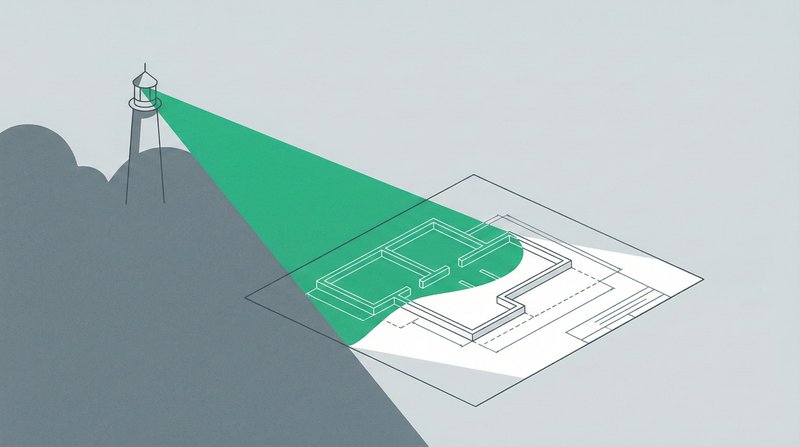
Visibility Before Validation: Why Proof Comes First Now
There's an old business sequence that made sense for a hundred years: build the product, then find the customers.
That order was rational when distribution was physical and scarce. If you got placement on a shelf, you got a chance. The shelf was the discovery system.
Online, the shelf is a set of machines. And those machines can't respond to what they can't observe.
So the sequence flips.
Visibility must come before validation.
This isn't a marketing preference. It's a mechanical constraint. Validation is downstream of being findable.
If you're holding domains while you "wait to see if they have value," this matters. A parked domain isn't paused. It's absent from the places where learning happens. It can't produce proof because it can't produce contact.
The inversion: why visibility became step one
David Perell describes the structural shift in plain language: "Before the Internet, companies built products first, audiences later. Now, they build audiences before products." (Perell: Audience-First Products)
I don't love the word "audience" here. It suggests performance. What he's pointing at is simpler: legibility.
When an idea becomes legible on the signal layer, it can be observed. Once it's observed, it can generate responses. Those responses are the raw material of proof.
Perell's framing often gets filed as creator strategy, but it's bigger than that. It's about order of operations for any digital asset, including a domain.
Validation requires a feedback loop:
- Encounter: someone runs into the idea in a real context (search, link, recommendation, mention).
- Reaction: they ignore it, click it, reply, ask a question, share it, complain about it.
- Interpretation: you map the reaction to intent (curiosity, confusion, disinterest, urgency).
- Adjustment: you revise the artifact so the next encounter teaches you more.
No encounter, no reaction. No reaction, no signal. No signal, no learning.
That's the core mistake founders make when they treat visibility as a "later" problem. They aren't skipping promotion. They're skipping measurement.
Silence is not evidence. Silence is often a measurement failure.
"No market need" is often "no market visibility"
CB Insights is widely cited for analyzing startup post-mortems and surfacing "no market need" as the most common failure category, often summarized as 35% of cases. (CB Insights: Top reasons startups fail)
The number matters less than the pattern it points to: teams build things nobody wanted.
But there's a prior question that rarely gets asked:
How many of those teams proved there was no need, versus never creating the conditions where need could reveal itself?
A launch to nobody feels like rejection. In practice, it can be indistinguishable from invisibility. If discovery systems didn't surface you, and the people you built for never encountered it, the market didn't say "no." The market didn't get a turn.
This is the domain version of the same failure mode. A parking page is a silence machine. It produces the kind of quiet that looks like a verdict, while preventing the only thing that can produce a verdict: contact.
Parking doesn't validate negatively. It prevents validation entirely.
Parking pages aren't a pause state, they're a public state. If you want the deeper mechanics behind that idea, here's the deeper cut: Why Most Domains Fail Before They Ever Get a Chance.
The "95% fail" debate is the point, not a problem
You'll see the claim that "95% of new products fail" repeated everywhere, including posts that attribute the figure to Clayton Christensen. (MIT Professional Education on the 95% claim)
NielsenIQ has pushed back on the "95% fail" framing as an "urban myth," arguing that outcomes vary significantly by definition, category, and how you measure over time. (NielsenIQ: the 95% myth context)
That tension is useful because it forces the right posture: don't worship a number. Understand the mechanism.
The exact percentage is arguable. The mechanism is not.
New things die when they're built in isolation from real customer context.
Isolation isn't always a deliberate choice. It's often a default outcome of invisibility. If no one can find the artifact, the artifact can't attract corrective feedback. The builder fills the vacuum with guesses and calls them research.
This is why "If you build it, they will come" is so corrosive online. It isn't just wrong. It's operationally misleading. It encourages people to treat being unobservable as neutral, when it's actually the decision that removes the entire measurement system.
A clean way to say it:
- Building creates a thing.
- Visibility creates encounters.
- Encounters create contact.
- Contact creates signals.
- Signals create proof.
If you postpone visibility, you postpone contact. If you postpone contact, you postpone proof. And by the time proof arrives, you've usually spent the budget.
Product-market fit requires a market you can reach
Failory summarizes reasons failed founders cite and includes lack of product-market fit as a common one, often presented as 34% in their set of interviews. (Failory: Startup failure rate)
Again, the analyst takeaway isn't the percentage. It's the dependency chain:
- Fit is a relationship between a product and a market.
- Relationships require repeated contact.
- Contact requires visibility.
This is where most people misunderstand "signals."
Signals aren't fluff. They're the evidence of life that makes contact possible:
- a page that answers a specific question,
- a claim that can be indexed and referenced,
- a footprint that returns when someone searches for the problem again,
- a consistent surface where the right person can raise their hand.
Signals are the asset because signals make you observable. They're how discovery systems learn you exist and how humans learn what you are.
We pulled this thread harder in Signals Are the Asset.
A market you can't reach is indistinguishable from a market that doesn't exist. Not philosophically. Mechanically.
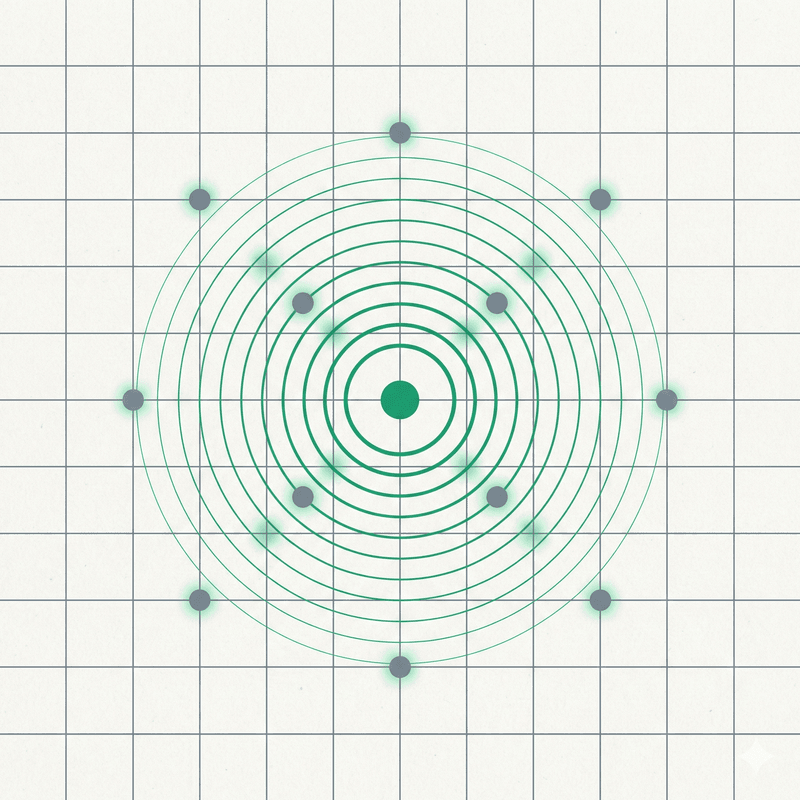
Visibility compresses the validation timeline by removing latency
Startup Genome's work is often summarized with a brutal line: startups need 2–3 times longer to validate their market than founders expect. (Startup Genome: Why Startups Succeed report PDF)
Most people read that as encouragement to be patient. But the operational point is simpler: latency.
When visibility is low, the time between "I want to test this" and "a real person encounters it" is long. You spend weeks trying to find test subjects. You spend months waiting for the world to bump into you by accident.
Visibility compresses validation time by reducing that latency. It increases the rate of contact, which increases the rate of signal, which increases the rate of learning.
If you already have visibility in a problem space, encounters are cheap. Tests run fast.
If you're starting from zero presence, every test is slow because you're building the channel and the test simultaneously.
If you're parked, the timeline is unbounded. Not because the idea is bad, but because the system has no way to observe you.
At portfolio scale, this becomes a systems problem, not a motivation problem. Related: Managing 10 Domains Is Easy. Managing 50 Changes How You Think.
What this means for your domains
If you're holding a portfolio, you're probably carrying a story that feels responsible: "I'm saving these for when I'm ready."
But while you wait, the domains are invisible. And because they're invisible, they're untestable.
You can't "see if it has value" through an appraisal tool or by waiting for an inbound offer. Those are administrative interfaces, not validation loops.
A domain becomes testable when it has the minimum surface area required for contact:
- one page that makes a clear promise,
- one page that answers a real question in the niche,
- one mechanism for the right person to raise their hand.
That isn't "building the full site." It's stopping the silence.
Put differently: you're not trying to be big. You're trying to be observable.
This is why the warmed domain matters. It moves the asset from a registrar database into the places where reality can touch it.
Once visibility exists, the next constraint shows up: trust. Because visibility without trust is just noise. But you don't get to solve the trust problem until you've solved the invisibility problem.
We explore that next layer here: Trust Is a System, Not a Feeling.
The sequence matters
The internet has a memory, but it only remembers what it can repeatedly observe.
Don't wait for validation to justify visibility. Visibility is what makes validation possible.
Build the visibility first. Then you'll finally have something real to measure.
This is the bridge between stewardship and trust. Warming is choosing to make an idea legible before you feel ready. Quietly. On purpose. Visibility isn't marketing—it's the prerequisite for learning whether your idea has a chance. What is SiteWarming?
Share this article
Ready to Transform Your Domain Portfolio?
Start building real value with your domain investments today.