How to Find Untapped Domain Opportunities (White Space Strategy)
 Bret Siers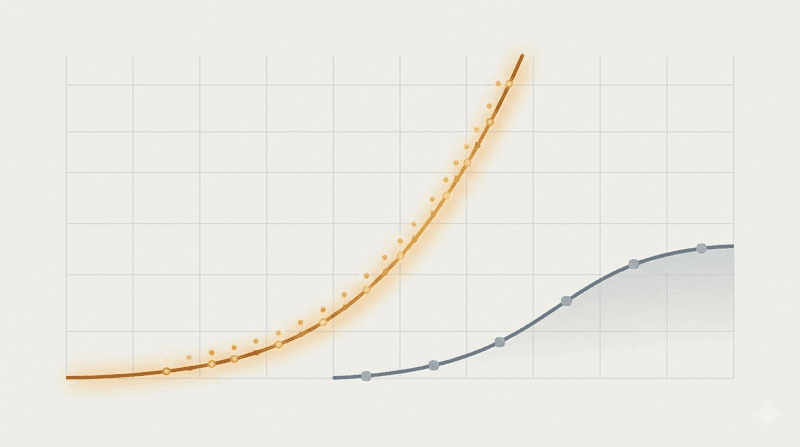
You published something. Nothing happened.
You updated your site. Still nothing.
You started to wonder if any of this matters.
It does. You just can't see the mechanism yet.
Early work feels like shouting into a canyon because the response is delayed. Not because you're wrong, but because discovery systems don't reward intention. They reward patterns they can observe repeatedly.
If you're building something real, this is the frustrating part: you can be doing the right work and still be functionally invisible.
Why Small Actions Feel Pointless (Until They Compound)
Founders love big moments because big moments are legible.
A launch is legible. A press hit is legible. A spike is legible. You can point to it and say, that's when it happened.
But the internet's signal layer is not built to reward your best day. It's built to learn from your repeated days.
There's a concept from science and sociology that explains this: the Matthew Effect. Once someone has a bit of visibility, the system tends to deliver more credit, more attention, and more opportunity to them, which then creates even more visibility. The advantage compounds. Omniscient Digital describes this dynamic clearly.
This is not "life isn't fair" dressed up as theory. It's a system property.
And it's why the early phase is psychologically brutal. Your first small signals are below the recognition threshold. They don't trigger amplification. They feel pointless.
They aren't pointless. They're deposits.
A single deposit doesn't change your account. A pattern of deposits does.
There's another research-backed dynamic that sharpens this: Double Jeopardy. In Ehrenberg's work, bigger brands don't just have more buyers, they tend to have more loyal buyers, too. Smaller brands suffer twice. Fewer buyers and less loyalty among the buyers they do get.
Translate that to domains and early-stage presence and you get the same shape:
If you're dormant, you don't just miss discovery. You miss the compounding that makes discovery cheaper over time.
Signals aren't a nice-to-have marketing activity. They become an asset when they compound into recognition. I wrote more on this here: Signals Are the Asset.
How Discovery Systems Reward Pattern Recognition
People ask this as a painful question: "Why isn't my website showing up?"
Sometimes they ask it as a legacy query: "Why isn't my website ranking?"
Same anxiety. You built something. You expected it to be discoverable. It isn't.
Discovery systems can't "understand" you the way a friend does. They infer from proxies:
- Is this place alive or abandoned?
- Does it change in ways that suggest stewardship?
- Is it connected to by other places?
- Do people engage with it in ways that look like usefulness?
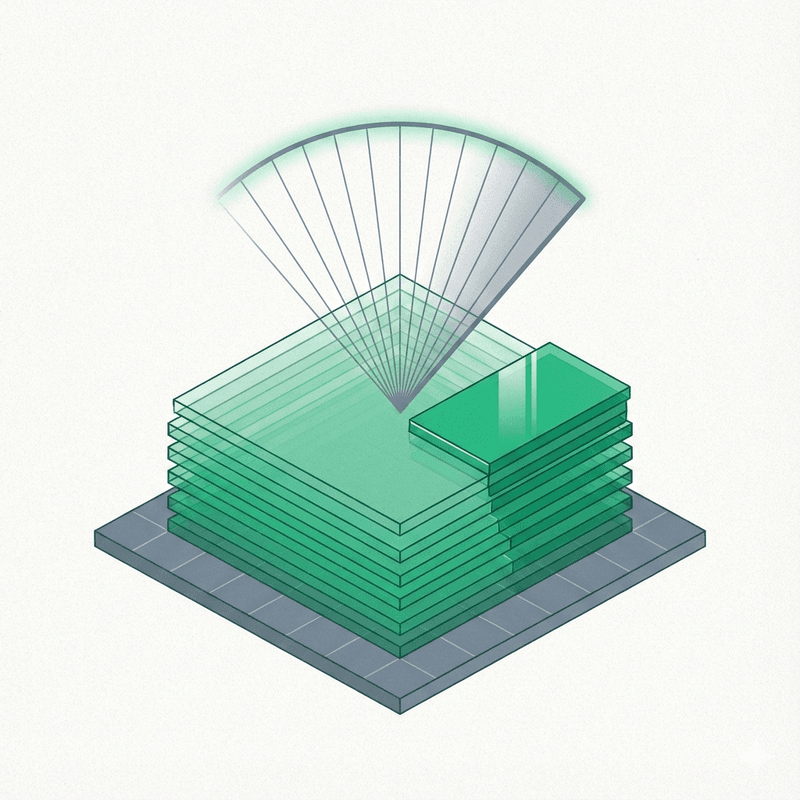
One of the few things Google has been explicit about is freshness. In 2011, Google described an algorithmic change aimed at returning "fresher" results for queries where recency matters.
That matters because it reveals a principle, not a tactic: a discovery system that serves outdated answers fails its job.
So updates matter. Not as theater. As evidence of life.
Exploding Topics frames freshness clearly: it isn't one update. It's a pattern of updates over time.
This is where founders get trapped by over-steering.
They hear "update" and translate it to "ship something big." Big means slow. Big means perfect. Big means you wait.
But systems don't need your biggest artifact. They need consistent signals that teach them what you are.
There's a second compounding loop hiding inside this: once something reaches a strong discovery position, it tends to earn more of the signals that keep it there. More visibility produces more clicks, more connections, more engagement, which reinforces position. The moat thickens.
That's why "white space" looks like luck from the outside.
From the inside, it's pattern recognition.
Why Dormant Domains Fall Behind Exponentially
A dormant domain doesn't just "pause." It broadcasts absence.
And absence becomes a durable signal.
If the web repeatedly observes "nothing here," it learns the simplest story available: not active, not referenced, not useful to surface.
Related: Why AI Can't Read Your Parked Domain.
The cost isn't only the visibility you didn't earn. It's the time you'll need later to overwrite the old pattern with a new one.
Research on cumulative advantage in media makes this feel less personal and more mechanical. A 2025 paper in European Sociological Review summarizes findings that once someone crosses a threshold of mentions, future mentions become self-reinforcing. Past attention predicts future attention because the system keeps choosing what it already knows.
That threshold logic shows up everywhere discovery exists.
And it changes how you should think about "later."
Later isn't just delayed effort. Later is effort spent while someone else's pattern compounds.
What "Sending Signals" Actually Looks Like
This is where most advice becomes unhelpful because it turns into volume worship.
This is not about volume. It's about consistency and legibility.
Think smaller than you want to think.
Small, honest updates
- Add one paragraph that clarifies what you actually mean now.
- Fix something broken and explain the change.
- Expand a section that readers consistently misunderstand.
- Add a short "last updated" note when substance changes.
One update is easy to ignore. Twenty updates create a pattern. A hundred updates create expectation.
Legibility that machines can parse
Clear titles. Clear page intent. Consistent language. Structured data where it helps.
Not because structure is magic. Because structure is what makes an artifact readable without a human interpreter.
Connections that accumulate
If an artifact is useful, it can earn connections over time, which increases its discoverability without requiring you to "buy" every new impression.
Winsome Marketing describes this dynamic in plain terms: unlike many physical assets, a thoughtful piece can appreciate as it accumulates references and authority, continuing to work over time.
That's compounding.
And it's why "starting small" is not a motivational poster. It's an operational advantage.
This is what warming does: it starts the pattern. Not with a launch or a campaign, but with small, consistent signals that compound before anyone notices. By the time competitors realize what happened, the gap is already too wide to close. What is SiteWarming?
Starting Small vs. Starting Later: The Math
Founders ask some version of: "How long does 'SEO' take?"
Translated: how long until discovery systems can recognize me as real?
The honest answer varies by category. But the directional truth is stable:
Starting later means you're building recognition while someone else is compounding theirs.
A single perfect artifact next year rarely beats a year of steady modest artifacts starting now. Not because perfection is bad. Because pattern beats event.
This is also why waiting feels safe. You tell yourself you're raising the bar.
But a higher bar with no presence is still no presence.
So the better question isn't "Is this good enough?"
It's:
Am I sending signals at all?
If yes, you're teaching the system what to do with you.
If no, you're not behind. You're invisible.
And invisibility compounds against you.
You don't need a perfect launch. You don't need a breakthrough. You need to start the pattern.
One small signal today. Another tomorrow. Enough repetition that the system can recognize you.
A year from now, the gap won't feel like luck.
It will feel earned.
Share this article
Ready to Transform Your Domain Portfolio?
Start building real value with your domain investments today.